Roadmap
Building Australia’s cyber capability, together.
The consortium is working with industry and the broader community to co-design, validate, and evolve a rigorous model for cyber capability, recognition, and professionalisation.
The approach is collaborative, evidence-based, and designed to scale responsibly.
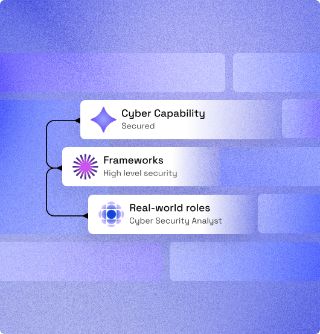

Occupations Framework
Defines cyber occupations for larger organisations and flexible, multi‑hat roles for generalists in smaller businesses. It uses cyber domains to group related functions and a work‑type layer to organise competencies into meaningful clusters.
A clear national map of cyber jobs and roles
Used by employers to structure teams and positions, while practitioners use it to understand career options and mobility with a common language.
- A flexible and tiered structure that spans cyber domains, occupations, Work‑Type Groupings and Roles
- Occupations for specialised teams and roles for IT‑cyber generalists.
- Alignment with national and international workforce models.
What success looks like?
- Works equally well for micro‑businesses and large enterprises.
- Domains and work‑types remain stable as threats and technologies evolve.
- Shared language harmonised internationally that improves hiring, planning, and practitioner clarity.
Capabilities Framework
Defines the skills, knowledge, and behaviours required for each occupation and role, grounded in real threat and risk environments. It ensures competence is validated consistently rather than inferred from credentials alone.
A standard for what “good” looks like in cyber skills
Used by employers to assess capability and plan development, while practitioners use it to benchmark their skills and identify growth areas.
- Competencies mapped from threat behaviours and risk to knowledge, skills, and abilities.
- Proficiency levels and assessment models for technical and non‑technical skills.
- Alignment with cyber security and threat frameworks to ensure capabilities address cyber risks.
What success looks like?
- Competencies are measurable and linked to risk reduction.
- Multiple pathways (training, experience, RPL) can demonstrate competence.
- Regular updates keep pace with technology and threat change.
Recognition Framework
Defines how practitioners, training providers, and organisations are recognised and accredited, embedding ethics, quality assurance, and accountability. It builds trust by ensuring consistent standards across the profession.
A trusted way to validate people and organisations
Used by employers as a quality baseline for talent, practitioners use it to demonstrate trusted, portable credentials, and educators use it as a reference framework for curriculum design.
- Accreditation pathways for practitioners.
- Ethical standards, CPD expectations, and accountability mechanisms.
- Recognition and mapping of existing education and experience.
What success looks like?
- Accreditation is credible, transparent, and widely accepted without duplication.
- Ethical and disciplinary processes strengthen public trust.
- Accreditation is accessible and respects cyber culture where practitioners are often self-taught.
Pathways Framework
Provides clear, inclusive entry and progression routes into cyber, recognising formal education, vocational training, self‑taught skills, and prior experience. It ensures learning aligns with competencies and supports a diverse, job‑ready workforce.
Clear, accessible, and inclusive routes into and through the profession
Used by employers to guide development planning, practitioners use it to navigate entry pathways, career transitions, and ongoing development.
- Multiple entry pathways including RPL and career‑change routes.
- Learning progression maps tied to competencies and roles.
- Moving beyond formal education with non-traditional, practical learning pathways.
What success looks like?
- Pathways are accessible and reduce barriers for under‑represented groups.
- Entrants are more job‑ready with less onboarding burden.
- Learning that evolves with changing threat, technology and regulatory environments.
Durability Plan
This plan ensures the scheme can grow nationally as an accepted and trusted asset that is self sustaining and evolves with technology, threats, and workforce needs. It provides the governance and rollout structure needed for long‑term impact.
A roadmap for long‑term growth and sustainability to remain relevant
Employers use it to plan adoption and integration as well as supporting the continued co-design and maintenance of the solution to remain relevant. Practitioners have confidence CyberPath remains relevant throughout their careers.
- Phased rollout with incentives and support for SMEs and regions.
- Governance, update cycles, and stewardship arrangements.
- Metrics, evaluation, and alignment with government policy.
What success looks like?
- Adoption grows steadily across industry, government, and education.
- Strong governance keeps the scheme current and credible.
- Australia is positioned as a global thought leader with a common language and tangible contribution to the global community.

Our partners